Sheeting Line
Automatic Croissant Production Line
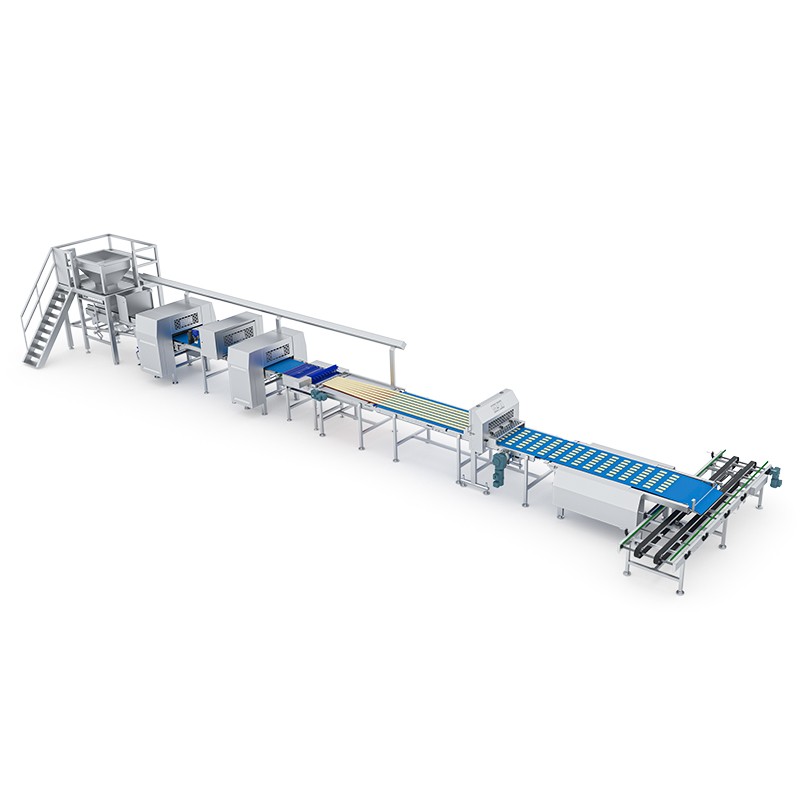
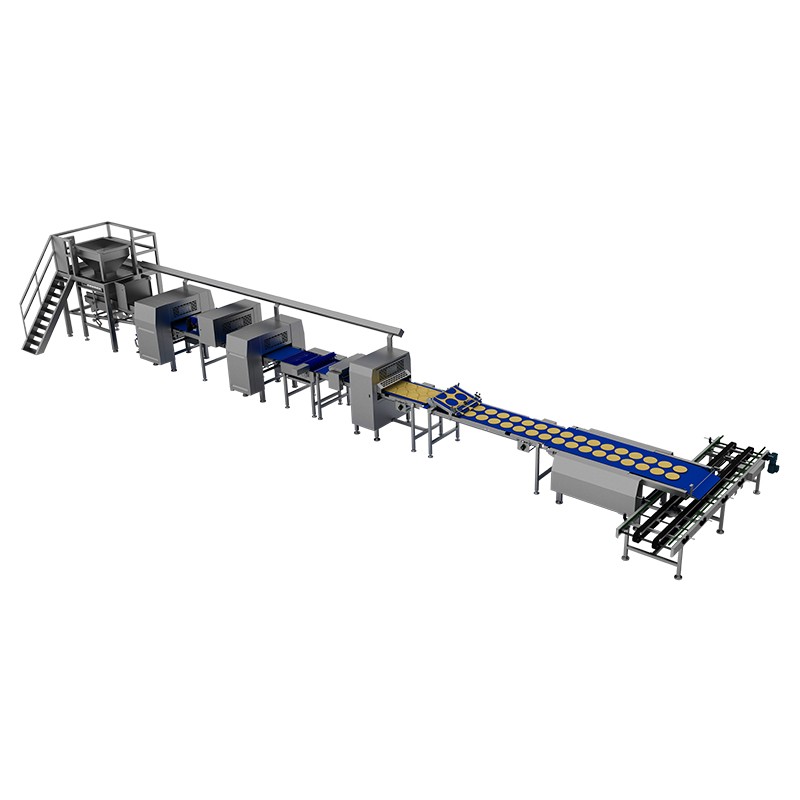
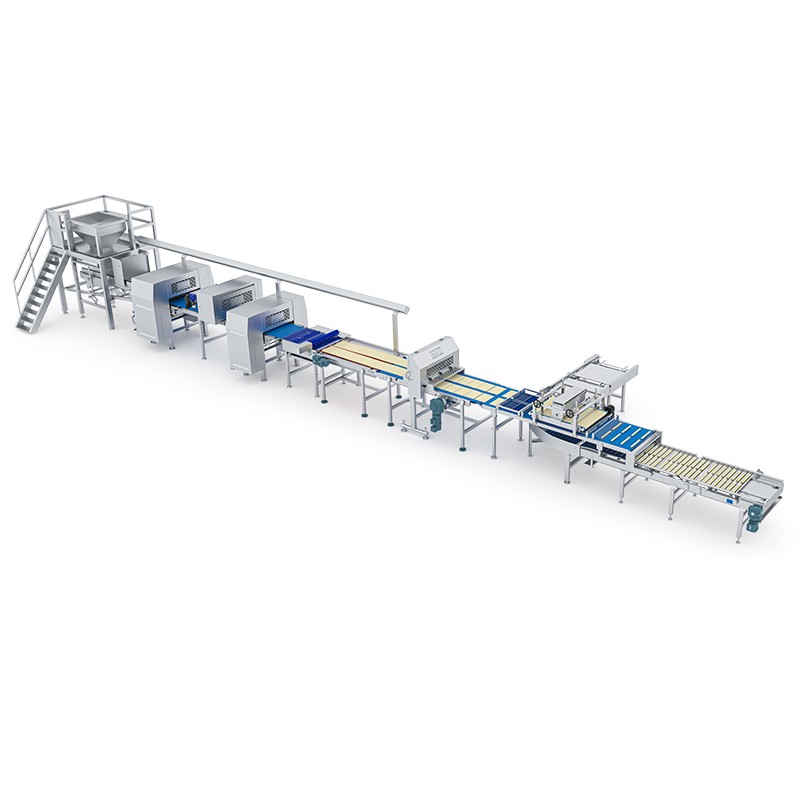
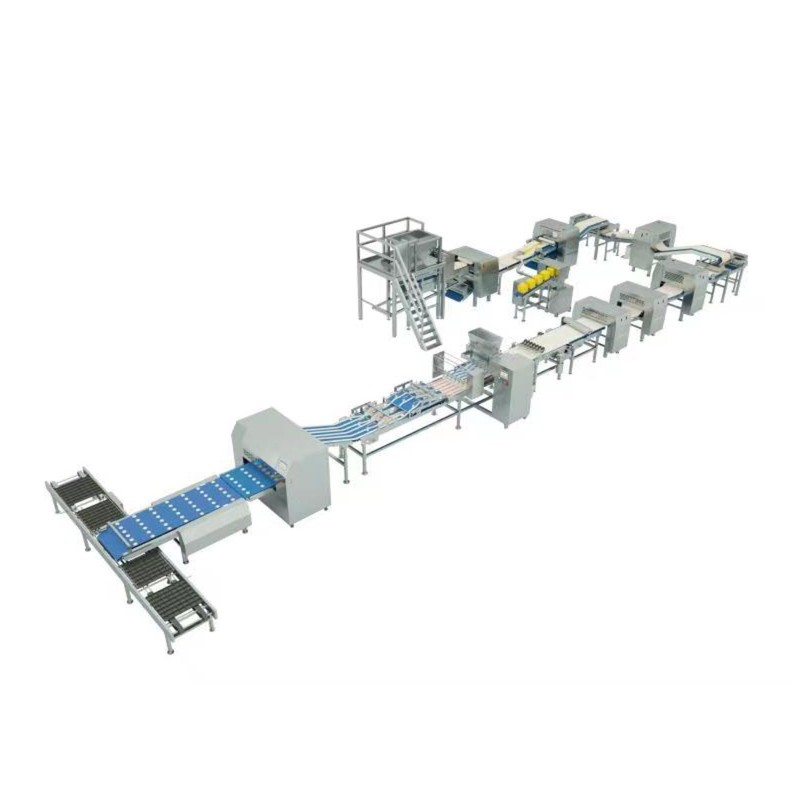
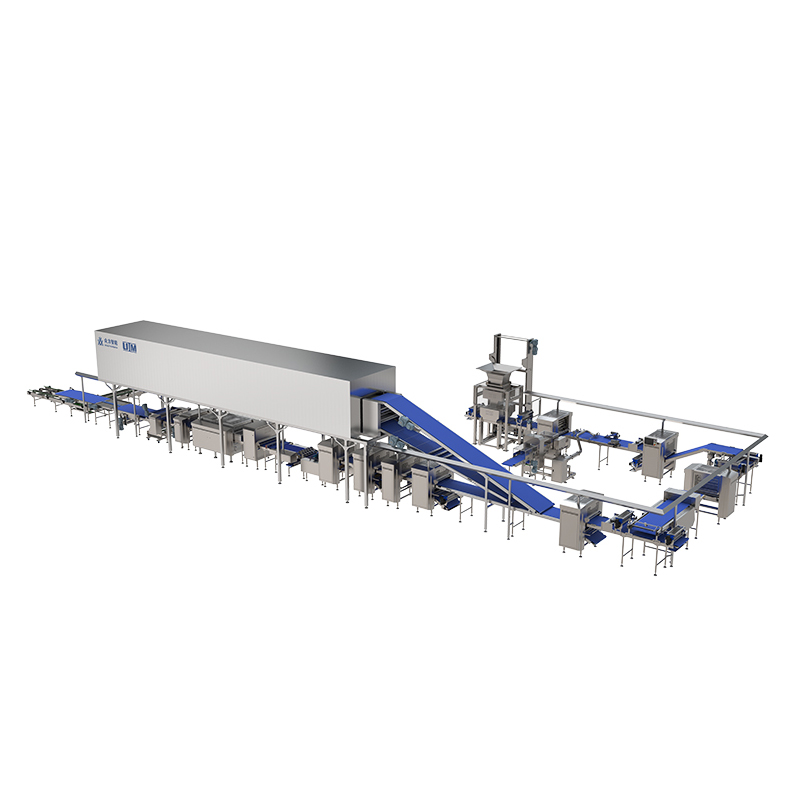
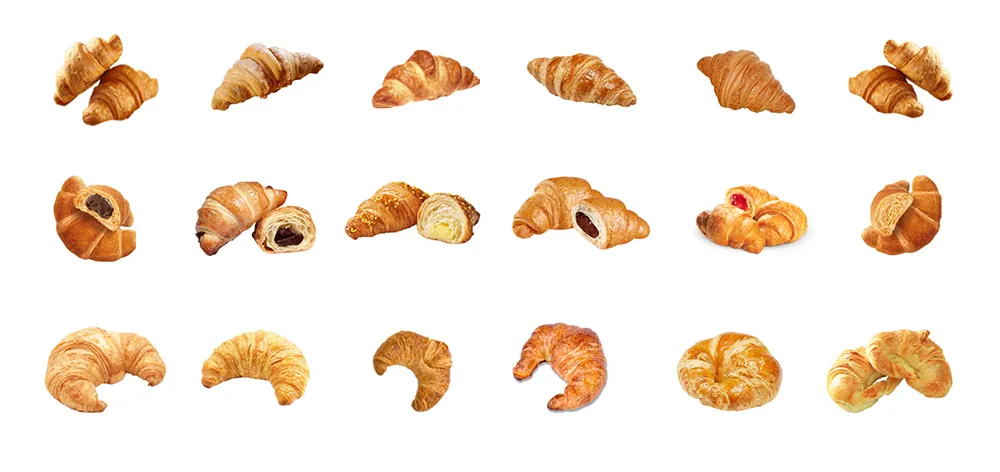
The automatic croissant line sheets, laminates with butter, folds, cuts, rolls and shapes traditional, mini, filled, chocolate and curved croissants. Cutting dimensions are preset in the control system, and the PLC stores product settings. Layout, capacity and voltage are set per configuration.
Product Overview
The Automatic Croissant Production Line is an industrial croissant line in the Sheeting & Lamination Lines category, built for bakeries that need consistent laminated pastry at volume. It links dough sheeting, butter lamination, folding, cutting and rolling into one continuous flow, with proofing and downstream modules added to match the plant. Hourly croissant output is set by product size, weight, dough formulation and automation level, and is confirmed for each project.
Manual lamination and rolling depend on the operator's hands and rhythm. This line holds dough thickness and layer distribution steady through the run, so croissants keep the same shape and flake from the first tray to the last. It suits industrial bakeries moving from bench work to scheduled, repeatable production.
Key Features
- Integrated flow: sheeting, butter lamination, folding, cutting and rolling run as one continuous sequence, cutting handling between stages.
- Controlled lamination: dough thickness and butter layer distribution are held steady, which protects the flaky, layered structure during baking.
- Precision cutting: laminated sheets are cut to preset dimensions, so piece weight and footprint stay within the set tolerance.
- Gentle conveying: coordinated transport and forming reduce mechanical stress on the dough, preserving its laminated structure.
- PLC and HMI control: conveyor speed, cutting dimensions and forming settings are adjusted from one screen, with stored product settings for changeovers.
- Flexible configuration: croissant size, weight and shape are set by recipe, and filling, tray loading, proofing, baking and packaging modules can be added.
- Reduced manual work: repetitive rolling and shaping are automated, lowering reliance on skilled operators and standardising the procedure.
Product Specifications
| Model | Automatic Croissant Production Line |
|---|---|
| Category | Sheeting & Lamination Lines |
| Core process | dough sheeting, butter lamination, folding, cutting, rolling and shaping |
| Product range | traditional butter, mini, filled, chocolate, straight and curved croissants |
| Product form | fresh, frozen raw or ready-to-proof, depending on downstream modules |
| Output capacity | available on request, set by croissant size, weight, dough formulation and automation level |
| Product size and weight | available on request, configured to customer specification |
| Cutting dimensions | preset and adjustable through the control system |
| Control system | PLC and HMI, with stored product settings |
| Dough contact material | food-grade contact materials |
| Line layout | customised to factory floor space and process flow |
| Downstream modules | filling, tray loading, proofing, baking, cooling and packaging available |
| Power supply | available on request, matched to the selected equipment set |
| Dimensions and weight | available on request, dependent on line configuration |
| Warranty and lead time | available on request |
Configurations & Options
| Standard lamination line | sheeting, butter application, folding, cutting and rolling for traditional butter croissants. |
|---|---|
| Filled product configuration | adds a filling depositor for chocolate and other filled croissants. |
| Frozen croissant configuration | adds freezing, conveying and packaging equipment for frozen raw or ready-to-proof products. |
| Mini croissant configuration | cutting and forming set for small-format products. |
| Straight and curved shaping | forming units selected to match the required croissant shape. |
| Downstream extension | tray loading, proofing, tunnel or rack ovens, cooling conveyors and automatic packaging. |
| Control upgrade | integration with a central production control system according to project requirements. |
Industrial Applications
- Croissant production line for industrial bakeries: plant bakeries running scheduled shifts need steady piece weight and shape across long runs; controlled sheeting and cutting hold both, so trays come out uniform.
- Croissant production line for frozen croissants: frozen-pastry producers need raw or ready-to-proof pieces that survive freezing and transport; the line can be configured with freezing, conveying and packaging equipment for that route.
- Croissant production line for filled croissants: bakeries making chocolate and other filled products add a filling depositor before rolling, so filling and shaping happen in one pass.
- Croissant production line for mini croissants: producers of small-format products use the cutting and forming settings for mini sizes, keeping high piece counts per hour practical.
- Croissant production line for laminated pastry: pastry manufacturers running other laminated products use the same sheeting, lamination and folding modules, with the forming section set for the product.
Key Advantages
- Continuous processing removes the pauses between sheeting, folding and rolling, so the line runs at a steady rate instead of waiting on manual handoffs.
- Controlled lamination is what the buyer actually sells: even butter layers give the flake and lift that customers judge a croissant by, batch after batch.
- Preset cutting dimensions keep piece weight close to target, which protects portion cost and keeps baking times even across the tray.
- Stored product settings shorten changeovers between sizes and recipes, so a line can run more than one croissant type in a shift.
- Automation of repetitive rolling and shaping lowers dependence on skilled operators and makes output less sensitive to staff turnover.
- Modular build lets a bakery start with the core line and add proofing, baking or packaging as volume grows, without replacing the front end.
How to Choose the Right Configuration
| Core lamination and forming line | bakeries making traditional butter croissants at volume; the deciding factor is the hourly output the sheeting and cutting sections can hold. |
|---|---|
| Line with filling depositor | bakeries selling chocolate or filled croissants; the deciding factor is whether the dough and filling process support depositing before rolling. |
| Line with freezing and packaging modules | frozen-pastry producers; the deciding factor is whether the product ships raw or ready-to-proof. |
| Mini croissant configuration | producers of small-format products; the deciding factor is the cutting and forming range for small sizes. |
| Full line with proofing, baking and cooling | bakeries that want the whole process under one control system; the deciding factor is available floor space and the downstream capacity match. |
| Custom layout | plants with fixed building constraints; the deciding factor is the factory layout and the automation level required. |
Why Choose Us
We build the line around your product, not a catalogue size. Send the croissant weight, dough and butter formulation, and target hourly output, and we return a configuration with the croissant production line price for that scope. As a croissant production line manufacturer we handle equipment selection, process planning, manufacturing, installation, commissioning and operator training. Buyers sourcing a croissant production line supplier China can request the full croissant production line specifications and the croissant production line datasheet before committing. Spare parts and after-sales support are quoted with the line so the plant knows the service route from day one. OEM and ODM work is available for buyers who need the line built to their own product design.
Factory Strength
The line is assembled and tested in-house, from dough conveying and sheeting units through the butter application, folding, cutting and forming sections to the control panel. Each machine is run before packing: conveyors are checked for tracking, sheeting rolls for gap consistency, the cutting system for repeatable dimensions, and the PLC and HMI for stored product settings. Modules are matched to the customer's layout before shipment. We supply complete lines and individual croissant machines to industrial bakeries in export markets, with installation and commissioning handled by our own technicians.
Quality Control
Inspection follows the build sequence. Incoming food-grade contact materials and drive components are checked against specification before assembly. In-process checks cover roll gap consistency, conveyor alignment, cutting dimension repeatability and forming accuracy. Final inspection runs the line and verifies control settings and stored recipes before packing.
- Incoming material check on food-grade contact parts and drives
- In-process checks on sheeting, cutting and forming accuracy
- Final run test of the assembled line and control system
- Documentation of settings and configuration shipped with each line
Packaging & Delivery
Modules are packed for export with contact surfaces protected and control panels crated separately. Loading plan and container count depend on the line configuration and are confirmed with the quotation. Port and trade terms are agreed per order.
- Packing: export crating with protected food-contact surfaces
- Container loading: confirmed against the final module list
- Port and trade terms: agreed at order stage
- Lead time: confirmed with the quotation, based on configuration
FAQ
How does the automatic croissant making machine keep the layers intact?
Conveying, sheeting, cutting and forming are coordinated so the dough is not overworked between stages. That keeps the butter layers in place through rolling and into proofing.
What decides the hourly croissant output?
Croissant size and weight, dough formulation, lamination method, forming method and the level of automation all set the rate. We confirm the figure for your product before quoting.
Can one line run different croissant sizes?
Yes. Cutting dimensions and shaping parameters are adjustable, and stored product settings simplify changeovers between sizes.
Can the line produce frozen croissants?
Yes. It can be configured for frozen raw or ready-to-proof croissants with the matching freezing, conveying and packaging equipment.
Can it handle filled croissants such as chocolate?
A filling depositor can be integrated where the product and dough process support filling. It sits before the rolling and shaping stage.
Can the line be built for our factory layout?
Yes. Layout and equipment configuration are designed around your products, target capacity, floor space and production requirements.
What is the croissant production line price?
Price depends on the modules selected, the automation level and the downstream equipment. Send your product specification and capacity target and we will quote the configuration.
What is your MOQ and lead time?
MOQ and lead time are set per project because each line is configured to order. Both are confirmed with the quotation.
Do you offer OEM and operator training?
OEM and ODM work is available, and operator training is part of installation and commissioning. Payment terms and warranty are agreed at order stage.