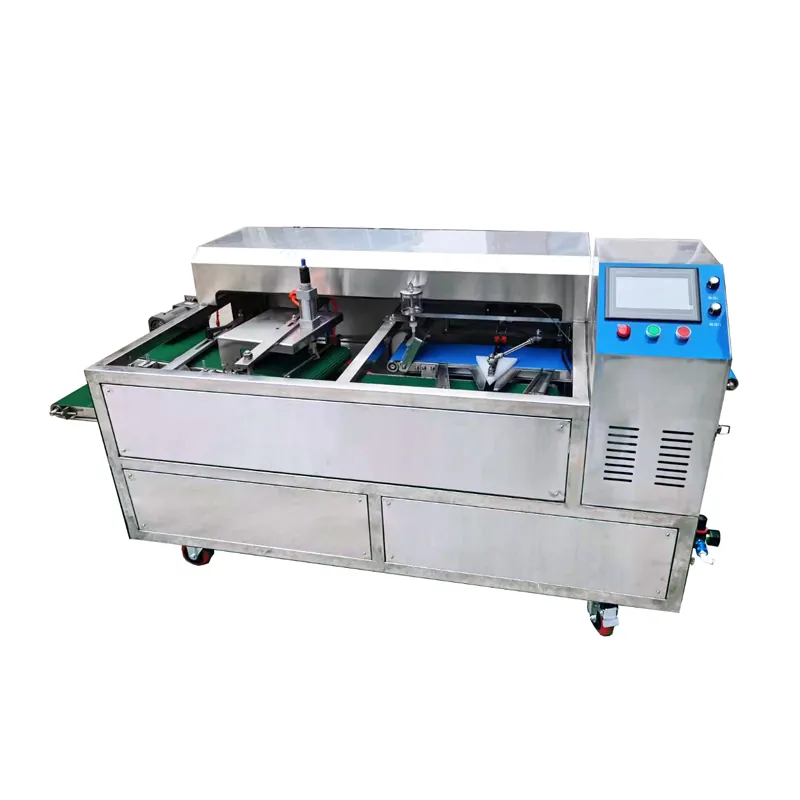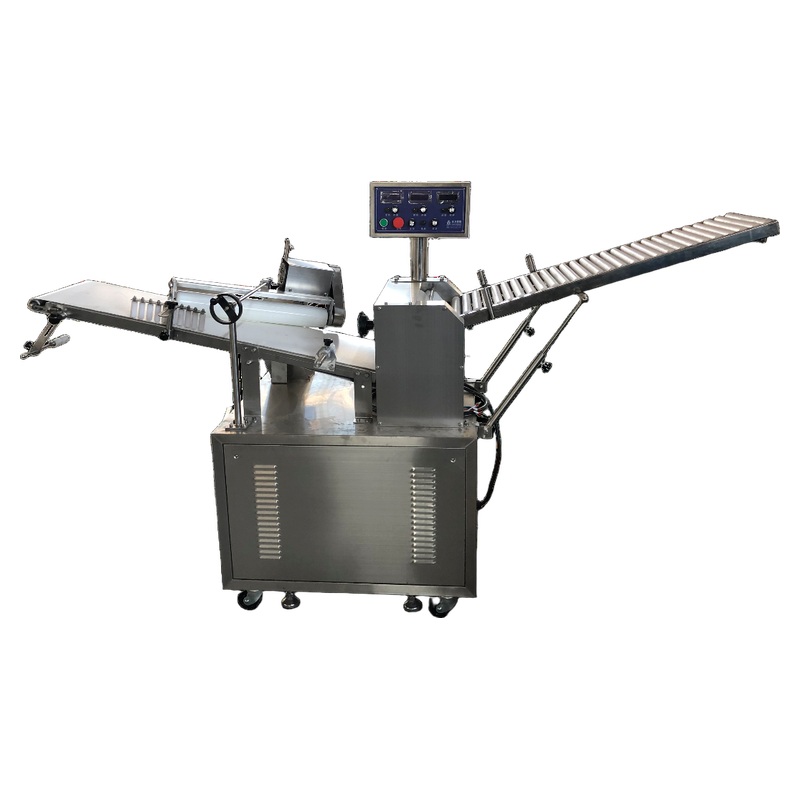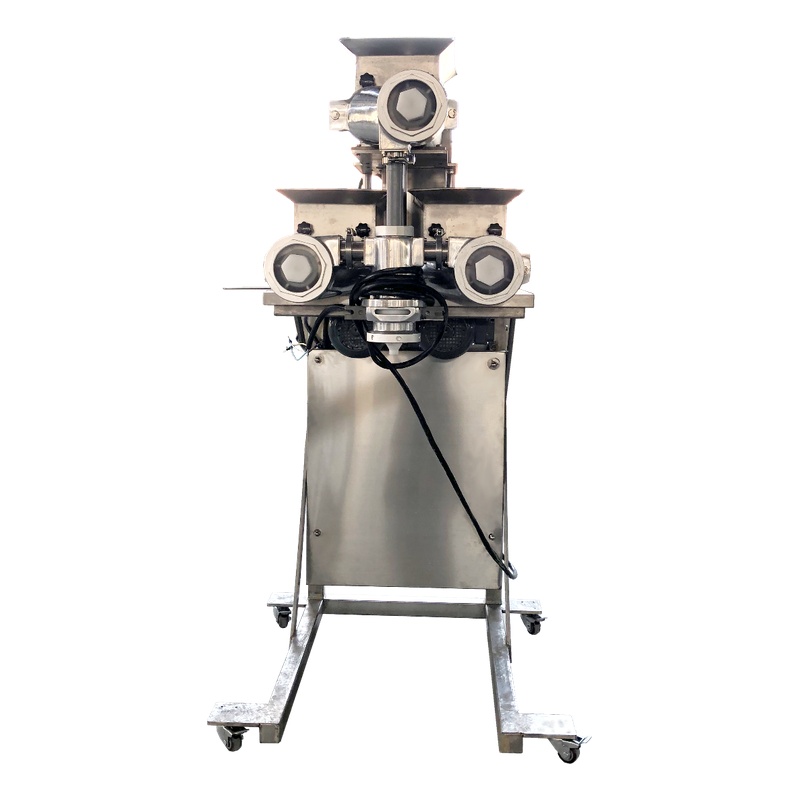
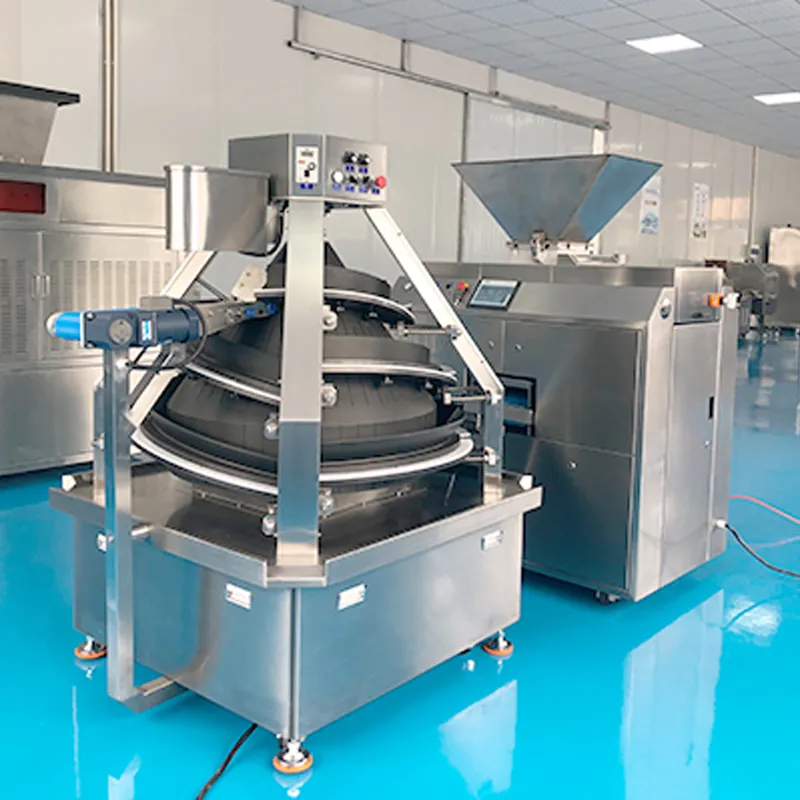
Multifunctional Equipment
Baozi Folding and Sealing Machine
The Baozi Folding and Sealing Machine folds and seals in one pass, which is what keeps the filling in through proofing. Pleats come at 6, 9 or 12. Fillings run from meat and bean paste to jam and vegetable, at 1000 to 7200 pieces an hour. One unit covers about ten people folding by hand.
Product Overview
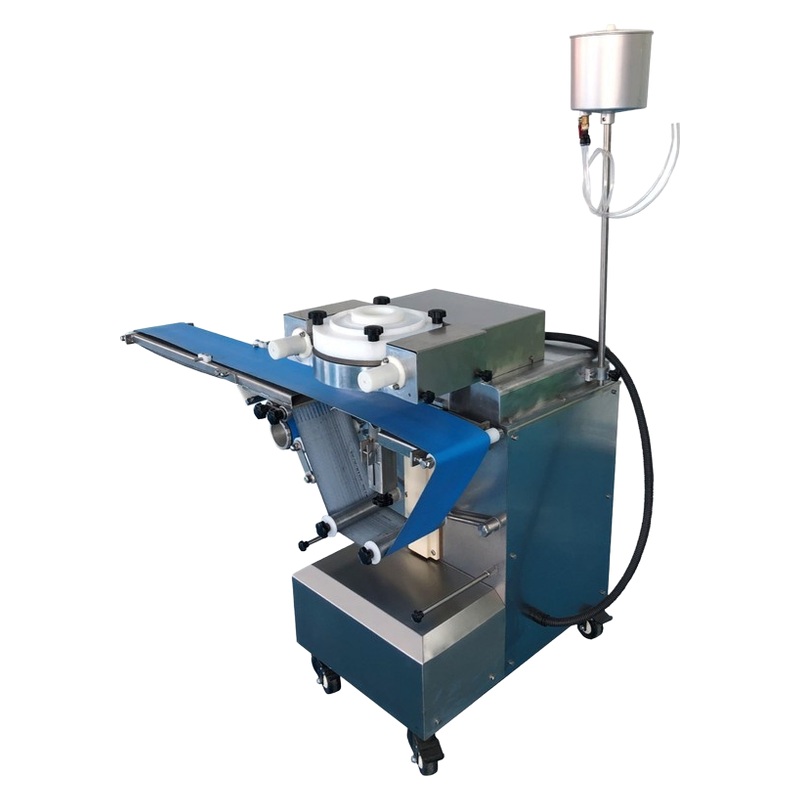
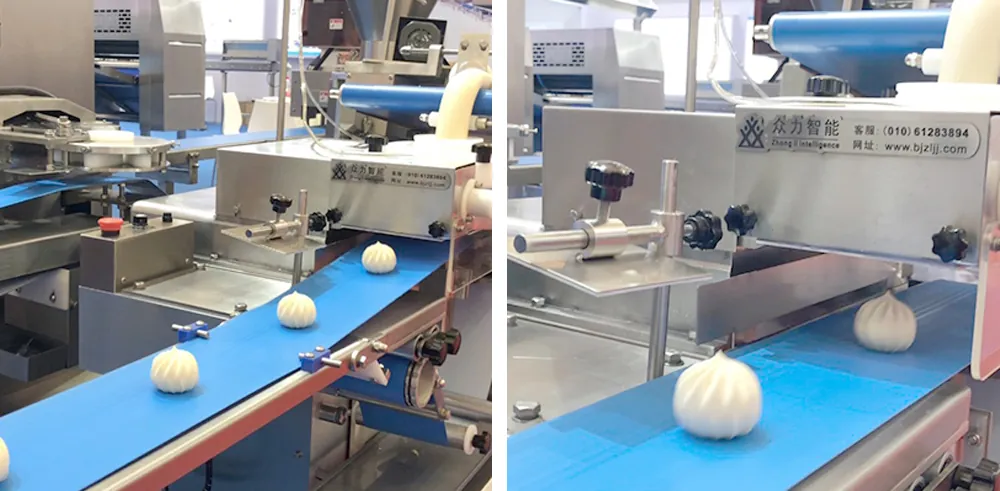
The Baozi Folding and Sealing Machine folds a filled dough piece and closes it, so the filling stays inside through proofing and steaming. The sequence on the machine is one action: the pleats are gathered and the top is sealed, which is what distinguishes the unit from a crease-forming machine that only presses a pattern into an open piece. Filling is placed before the fold, and sealing is the stage that keeps it there.
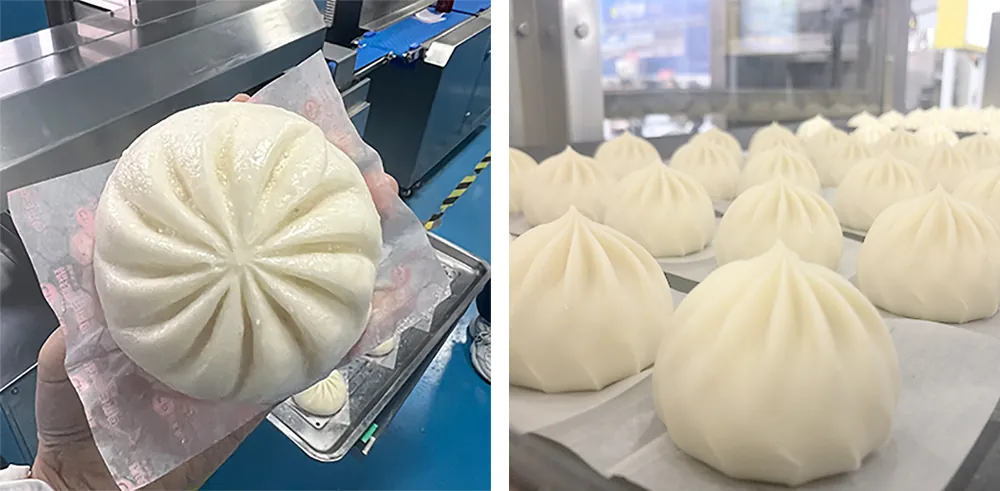
The frame measures 1350×780×1600 mm, the drive is 2.5 kW and the machine weighs 210 kg. Capacity runs from 1000 to 7200 pcs/h, and the pleat count is available in 6, 9 or 12. The unit takes meat, jam, bean paste and vegetable fillings, and the fold it produces is close to the result of hand folding.
Key Features
Eight points describe how the unit behaves once it is installed in a line.
- Folding and sealing in one action — the pleats are gathered and the top closed on the same pass, so the piece leaves the machine ready for proofing rather than open at the top.
- Sealing as the core function — closing the dough is what keeps the filling in place; the fold is the form, and the seal is the job.
- Pleat count 6, 9 or 12 — the pattern is set on the machine, so one unit covers the pleat densities commonly used for filled buns.
- Four filling families — meat, jam, bean paste and vegetable fillings are all within the range the machine is built to handle.
- 1000–7200 pcs/h — the capacity range covers a small shop counter as well as a factory batch, with the working point set by the piece and the pleat count.
- Hand-like fold result — the pleats read as folded rather than pressed, which matters where the product is sold on appearance.
- Repeatable sealing — the closure is made by the machine rather than by hand, so the seal sits at the same place on every piece in a batch.
- Compact and self-contained — 1350×780×1600 mm, 210 kg and a 2.5 kW drive on 220V/380V supply.
Product Specifications
The table lists the figures confirmed for this unit.
| Machine type | Baozi folding and sealing machine |
| Capacity | 1000–7200 pcs/h |
| Pleat count | 6, 9 or 12 |
| Filling types | Meat, jam, bean paste, vegetable |
| Overall dimensions | 1350×780×1600 mm |
| Power | 2.5 kW |
| Voltage | 220V/380V |
| Weight | 210 kg |
| Function | Pleat folding and top sealing of a filled piece |
| Labour equivalent | Covers the output of ten people folding by hand |
The 1350 mm length and 1600 mm height are the figures to check against counter or floor space, and the height matters where the unit sits under a shelf or a low ceiling. The 210 kg weight sets the handling method at installation. The 2.5 kW drive is the load the unit adds to the electrical budget, and 220V/380V covers the two supply arrangements in common use.
Configurations & Options
Configuration is settled by the filling and by the pattern the product carries.
- Pleat count — 6, 9 or 12, chosen to match the product rather than set by preference.
- Filling handling — the setting is matched to the filling type, since a meat filling and a bean paste behave differently under the fold.
- Voltage — 220V or 380V, matched to the supply at the installation point.
- Outfeed position — set to the proofing or steaming equipment that follows the machine.
- Capacity setting — the working point inside 1000–7200 pcs/h is set to the batch, with the pleat count and piece size taken into account.
Because sealing is the core function, the setting that matters most is the one that closes the top cleanly for the filling in use. A buyer who runs more than one filling should list them at enquiry, so the machine is configured for the range rather than for a single recipe.
Industrial Applications
The unit is used wherever filled buns are folded by hand today and the volume has outgrown the bench.
- Dumpling and baozi restaurants that fill and fold on site.
- Food factories running a filled bun line at batch volume.
- Hotels and restaurants with a high covers count and a fixed service time.
- Group canteens, schools and military units, where the same product is repeated daily.
In each case the gain is in the folding bench rather than in the kitchen. The machine covers work that would otherwise take ten people folding by hand, and it holds the same pleat count and seal position across a shift instead of drifting with fatigue.
Key Advantages
The first advantage is that folding and sealing are one operation. A piece that is folded but not closed loses filling in proofing and opens in the steamer; sealing on the same pass removes that failure at the source.
The second is labour. The capacity range covers 1000–7200 pcs/h and the unit stands in for a bench of ten people folding by hand, which matters most where the product, not the menu, sets the day’s work.
The third is consistency. Pleat count and seal position come from the machine, so a batch looks and closes the same way from the first piece to the last.
- Fold and seal on the same pass
- Pleats at 6, 9 or 12
- Meat, jam, bean paste and vegetable fillings
- Output from 1000 to 7200 pcs/h
- Fold result close to hand work
How to Choose the Right Configuration
Five questions settle most of the specification before price is discussed.
- Which fillings will run? Meat, jam, bean paste and vegetable fillings are all covered, but the setting is matched to the range you actually use.
- How many pleats does the product carry? Choose 6, 9 or 12, since the pattern is part of what the customer sees.
- What batch do you need to fold? Compare the daily target against 1000–7200 pcs/h before choosing the working point.
- What happens to the piece after sealing? The outfeed is set to the proofing or steaming equipment, so give that machine’s height at enquiry.
- What supply and floor space are available? The 2.5 kW load, the 1350×780×1600 mm frame and the 220V or 380V supply all have to be settled before build.
Where the machine replaces a manual bench, count the pieces folded per shift rather than per hour. The capacity figure is a range, and the working point that suits a restaurant service is usually well below the top of it.
Why Choose Us
We quote the folding and sealing machine against your filling range and your batch target, not against a catalogue page. Send the fillings you run, the pleat count and the pieces needed per shift, and the quotation states the configuration that fits.
The folding head and the sealing section are built in-house, so a change to the fold or to the seal is a factory adjustment rather than a third-party request. Spare parts for the folding head and the sealing section are held for machines already in the field.
For export orders the machine is run before packing, and the fold and the seal are checked against the order. OEM and ODM requests are handled at the drawing stage, with voltage and line-integration details confirmed before production starts.
Factory Strength
The machine is assembled and tested in our own plant, with the folding head, the sealing section, the frame and the electrical panel built in-house rather than bought in as a finished unit. Each unit is run before packing, and the pleat count, the seal position and the outfeed alignment are checked against the order specification. Units are exported to bakery and food-machine buyers in overseas markets, and the same assembly team handles both standard machines and configured orders.
Because sealing decides whether the piece survives proofing, the build check includes a run that closes the top and inspects the closure, not a run that only forms the pleats.
Quality Control
Incoming stainless sheet and bought-in components are checked against the drawing before assembly. In-process checks follow the build: frame weld and square, folding head mounting, sealing section fit, then the electrical panel. Every unit gets a run test before packing, and the record is kept against the serial number.
- Incoming material check on stainless sheet and bought-in components
- In-process inspection at frame, folding head and sealing section
- Pleat count checked against the order
- Run test with the fold and the seal inspected together
- Test record filed against the machine serial number
The run test opens the closure rather than only looking at the outside, because a seal that looks closed can still be thin at one point. Any piece that fails the check is traced back to the head setting before packing.
Packaging & Delivery
The machine is packed for export in a wooden case sized to the 1350×780×1600 mm frame, with the folding head and the sealing section protected inside. Container loading depends on order quantity and is confirmed at quotation. Port and trade terms are agreed per order, and the buyer supplies the delivery address, consignee details and any marking requirements before shipment.
- Export wooden case with internal protection for the folding head
- Container loading confirmed per order quantity
- Port and trade terms agreed at quotation
- Buyer supplies consignee details and shipping marks
The packing list carries the pleat count and the filling range the machine was set to, so the receiving site can prepare the bench and the steamer before the case is opened.
FAQ
How is this machine different from a crease-forming bun machine?
A crease-forming machine presses a pattern into the top of an open piece and does not close it. This unit folds and seals a filled piece, so the filling stays inside. Sealing, not the pleat pattern, is the function here.
Which fillings can the machine handle?
Meat, jam, bean paste and vegetable fillings. A filling that is much wetter or coarser than these should be described at enquiry so the setting is matched to it before the machine is built.
Can the pleat count be changed?
The machine is supplied at 6, 9 or 12 pleats. Tell us which pattern the product uses when ordering, because the fold setting follows the pleat count.
What output can I expect?
The capacity range is 1000–7200 pcs/h. The working point inside that range depends on the piece, the filling and the pleat count, and it is set with the batch target rather than at the top of the range.
What supply and floor space does the machine need?
The drive is 2.5 kW on 220V/380V supply, the frame measures 1350×780×1600 mm and the machine weighs 210 kg. The height figure matters where the unit sits under a shelf or a low ceiling.