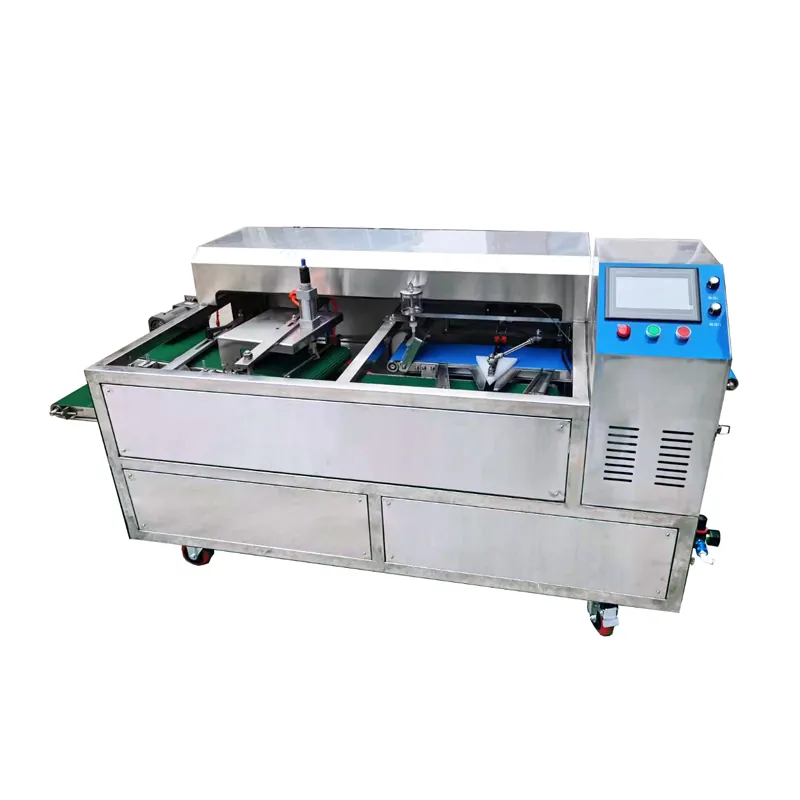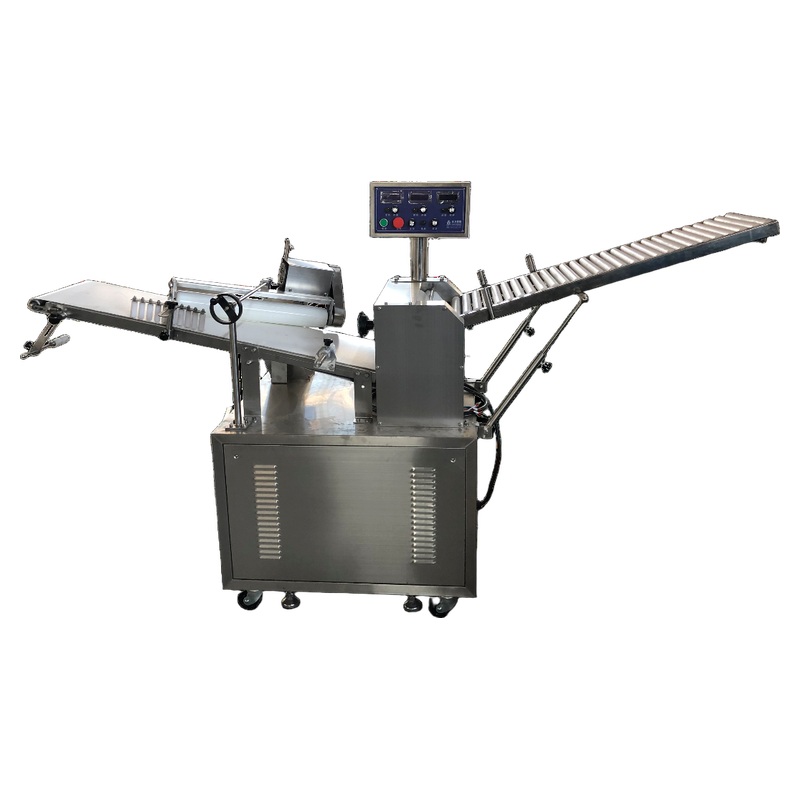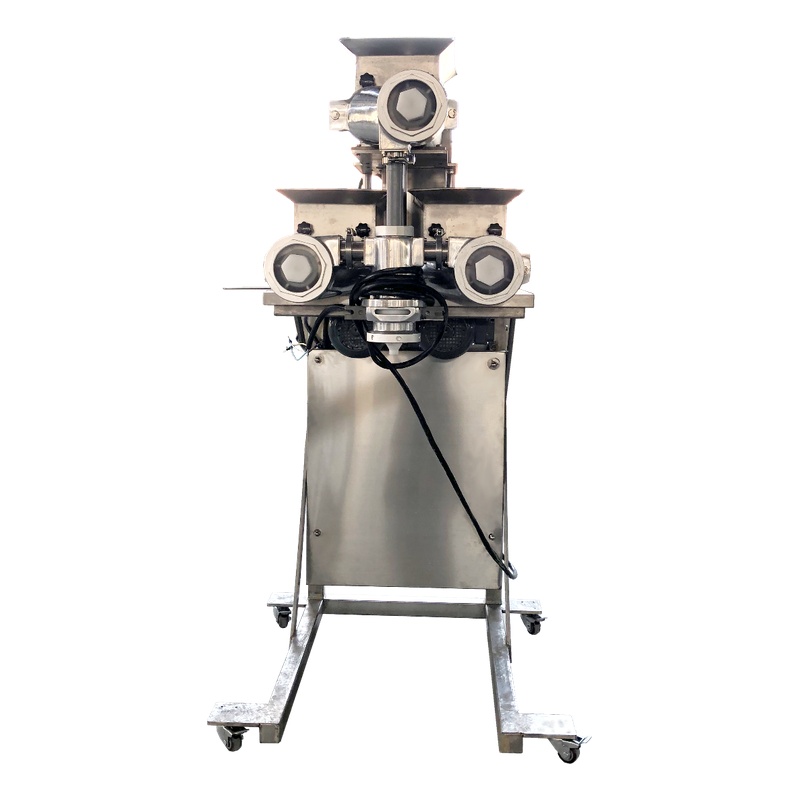
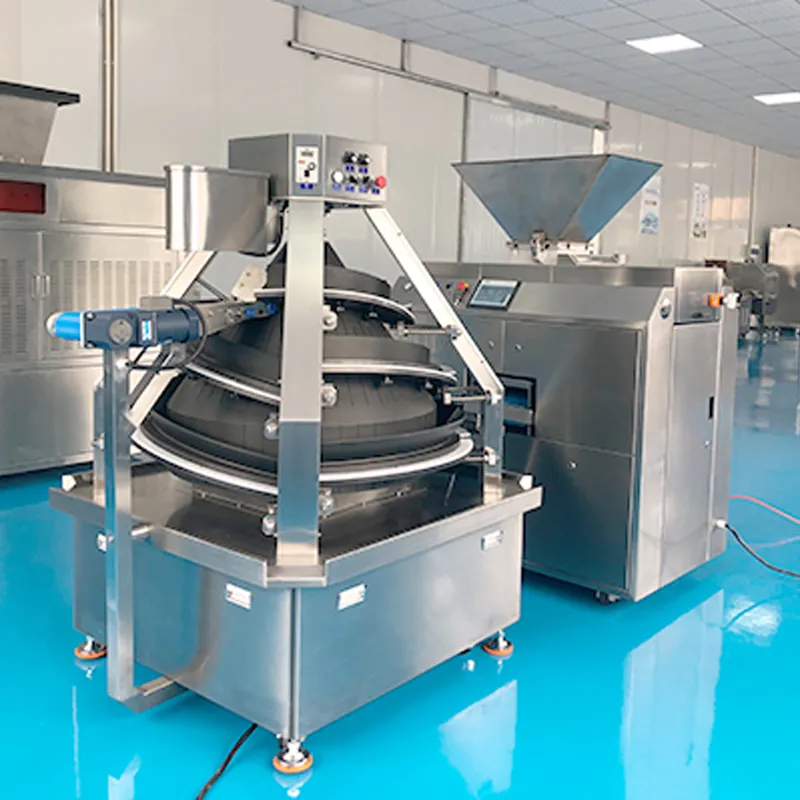
Multifunctional Equipment
300mm Table Top Dough Sheeter with Cutter
The 300mm table top dough sheeter with cutter presses the dough band and cuts it into pieces in the same pass. The forming machine downstream gets separated pieces at the set weight, not a continuous sheet. Roller gap and cutter set repeat on the next batch. Send your piece size and line layout and we'll quote against them.
Product Overview
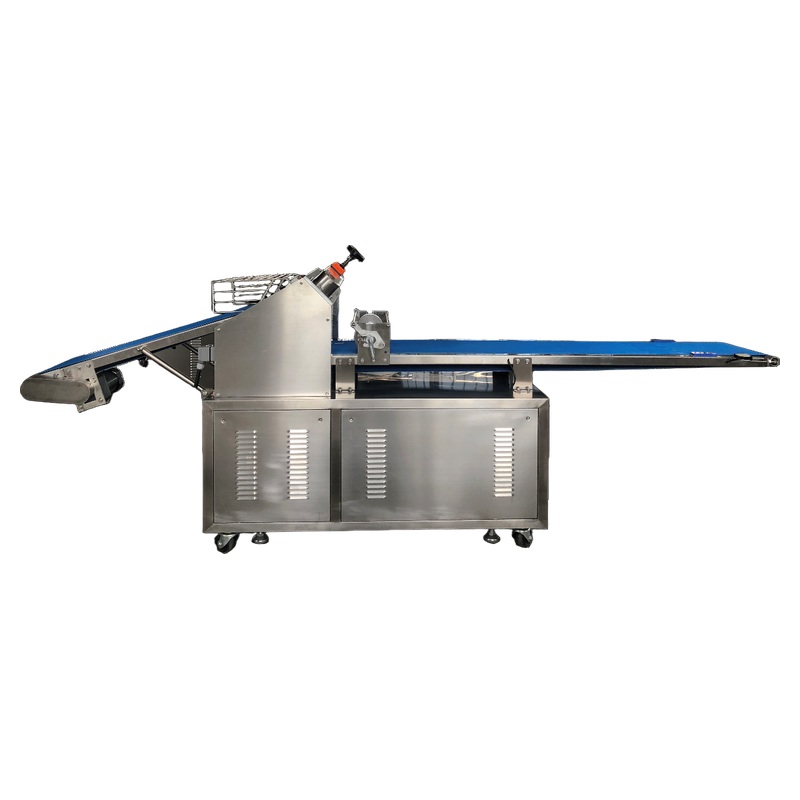
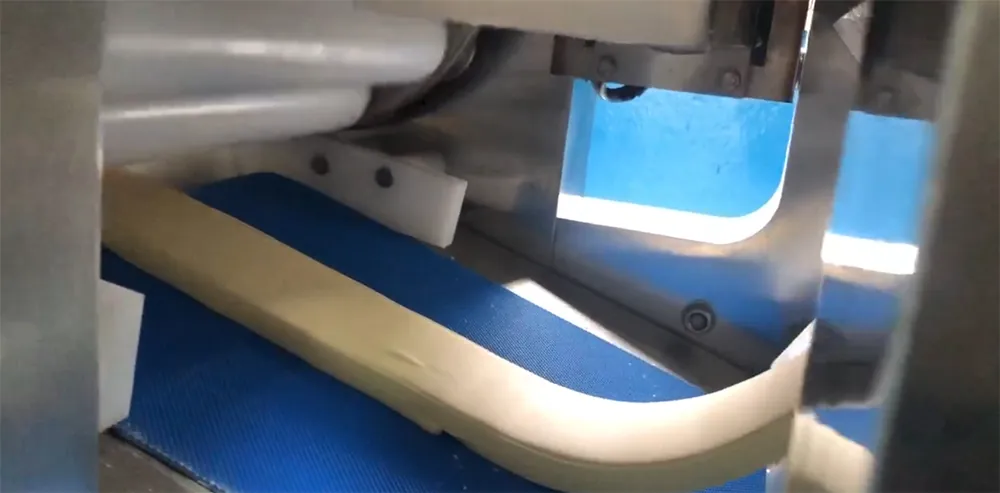
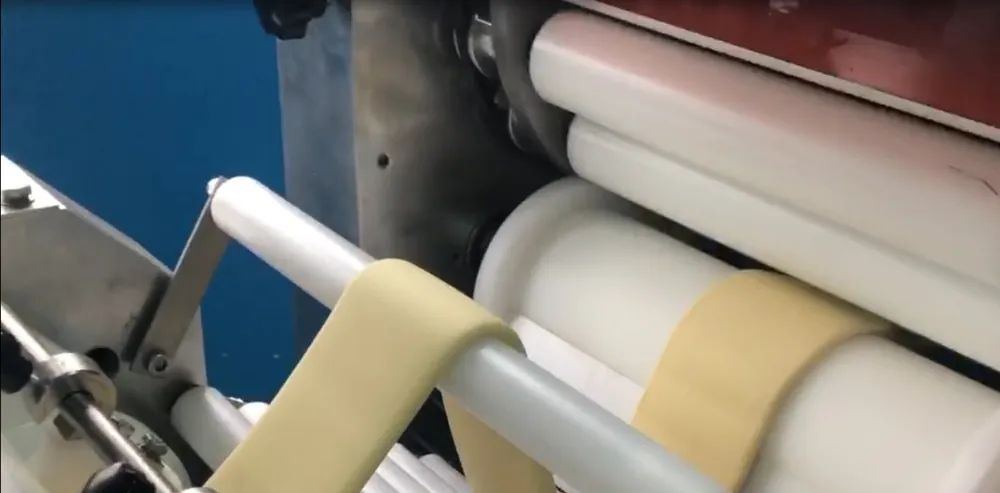
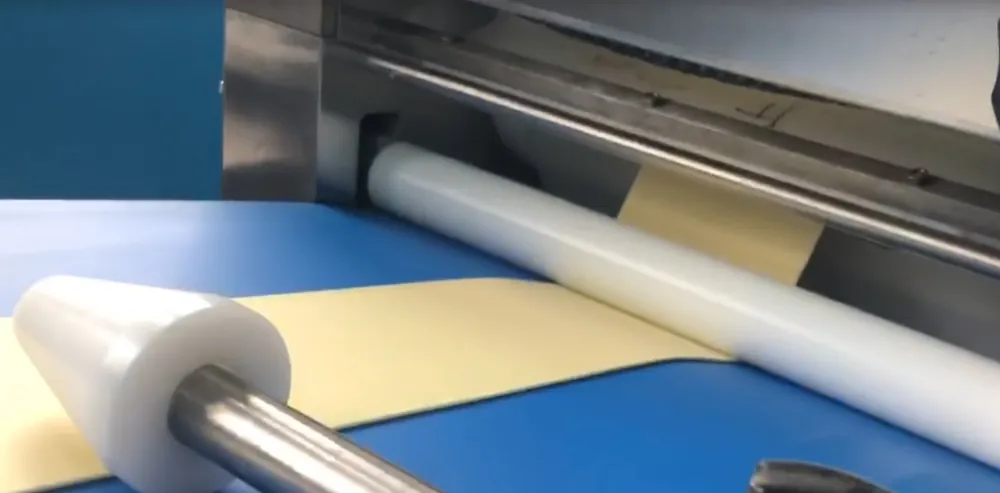
The 300mm Table Top Dough Sheeter with Cutter presses a dough band and divides it into pieces in the same pass. Dough arriving from the presser enters the 300 mm roller set, leaves at the thickness set on the roller gap, and is cut by the knife assembly at the outfeed before it reaches the forming machine. The forming machine therefore receives separate pieces rather than a continuous sheet it has to cut itself.
The unit is designed to run with a dough presser upstream and a forming machine downstream, and neither of those machines is part of it. Its own frame measures 3200×650×1100 mm and the machine weighs 330 kg. The drive is 3 kW on 220V/380V supply, sized for pressing and cutting together rather than for pressing alone.
Key Features
Seven points describe how the unit behaves once it is installed in a line.
- Cutter at the outfeed — the knife assembly divides the sheet as it leaves the rollers, so pieces arrive at the forming machine already separated and evenly pitched.
- Adjustable dough width and thickness — the side guides and the roller gap are set to the product, and both settings can be recorded and repeated on the next batch.
- Accurate dough weight and shape — a fixed thickness and a fixed cut length together give each piece the same dough volume, which keeps piece weight and baked colour even across a tray.
- Built for a three-machine line — infeed and outfeed are positioned to meet the dough presser on one side and the forming machine on the other.
- Optional second dough sheet — one more sheet can be added where a two-layer product is required, without a second line.
- Optional dividing knives — knives can be fitted to split the sheet into strips ahead of the cutter where the product calls for it.
- Drive sized for the cutting load — the 3 kW motor and the 330 kg frame carry the extra resistance of a knife working against a moving sheet.
Product Specifications
The table lists the figures confirmed for this unit. Anything not listed is settled with the line layout and the piece size at quotation.
| Machine type | Table top dough sheeter with cutter |
| Roller width | 300 mm |
| Overall dimensions | 3200×650×1100 mm |
| Power | 3 kW |
| Voltage | 220V/380V |
| Weight | 330 kg |
| Function | Sheet pressing and cutting in one pass |
| Cutting | Cutter assembly included at the outfeed |
| Upstream machine | Dough presser |
| Downstream machine | Forming machine |
The 3200 mm length covers the infeed run, the roller section and the cutting section, so it is the figure to check against floor space on the line. The 330 kg weight sets the handling method at installation, and the 3 kW drive is the load the unit adds to the electrical budget, higher than a pressing-only machine of the same width because the cutter works against a moving sheet.
Configurations & Options
Configuration is settled by the piece the forming machine has to receive. The cutter set and the roller setting decide that piece; the rest are interface details confirmed at order.
- Cutter set — matched to the piece size the forming machine runs, and supplied with the unit rather than adjusted on site.
- Dividing knives — fitted or not, depending on whether the sheet has to be split into strips before cutting.
- Sheet count — single sheet as standard, or an added second sheet for a two-layer product.
- Voltage — 220V or 380V, matched to the supply at the installation point.
- Infeed and outfeed height — set to the dough presser and the forming machine at the two ends of the line.
Because the cutter is built onto the frame, its position and the outfeed height are fixed at the drawing stage. A buyer who expects to change piece size later should raise it at enquiry, so the knife mounting is designed for a change of cutter.
Industrial Applications
The unit is used where a line needs pressed and separated pieces rather than a continuous sheet.
- Bakery lines producing buns and filled buns, where pieces are fed to a forming machine.
- Pastry lines that run a thin sheet and need an even piece weight at the former.
- Frozen dough plants, where pieces are shaped and frozen after cutting.
- Central kitchens and food factories running several piece sizes on one line.
In each case the cutter is what makes the unit different from a connecting sheeter: the piece is defined before forming, so the forming machine sets shape and the sheeter sets weight.
Key Advantages
The main advantage is that pressing and cutting happen on one frame. A line that would otherwise run a sheeter, then a separate cutting station, then a former needs three interfaces; with this unit there are two, and the piece leaves the machine at the size the former expects.
The second is weight control at the source. Thickness is set at the roller and length at the cutter, so piece weight is decided before forming instead of being corrected afterwards. That stability carries through proofing and baking, where an uneven piece shows up as colour variation rather than as a weight error.
- One pass from sheet to separated piece
- Piece weight set by roller gap and cutter, not by operator judgement
- Optional second sheet and dividing knives for layered or strip products
How to Choose the Right Configuration
Five questions settle most of the specification before price is discussed.
- What piece size does the forming machine run? The cutter set is matched to it, so this is the first figure to fix, and it also has to fit inside the 300 mm roller width.
- What sheet thickness does the product need? Thickness is set at the roller gap, and it works together with the cut length to give the piece weight.
- Is the sheet needed whole or in strips? Dividing knives are the difference between the two.
- Does the product need one sheet or two? A second layer is an option here and is easier to build in at order.
- What supply and floor space are available? The 3 kW load and the 3200×650×1100 mm footprint have to fit the line, and 220V or 380V must be fixed before the panel is built.
Where the answers are still open, send the forming machine drawing and the piece specification. The unit is then quoted against the interface it has to meet, with the cutter set confirmed before the frame is built.
Why Choose Us
We quote the sheeter with cutter against your line layout and piece specification, not against a catalogue page. Send the forming machine drawing, the piece size and the running thickness, and the quotation states the configuration that fits those figures.
The roller assembly, the cutter mounting and the frame are built in-house, so a change to the cut length or the sheet path is a factory adjustment rather than a third-party request. Spare parts for the roller section and the cutter assembly are held for machines already in the field.
For export orders the cutter is set and the machine is run before packing, and the check record goes with the documents where a line drawing has been supplied. OEM and ODM requests are handled at the drawing stage, with voltage and line-integration details confirmed before production starts.
Factory Strength
The unit is assembled and tested in our own plant, with the roller assembly, the cutter mounting, the frame and the electrical panel built in-house rather than bought in as a finished machine. Each unit is run before packing, and the roller gap, cutter pitch and outfeed alignment are checked against the order specification. Units are exported to bakery and food-machine buyers in overseas markets, and the same assembly team handles both standard machines and configured orders.
Because the cutter is mounted on the same frame as the rollers, the build check covers both: the knife is aligned to the sheet path and the outfeed is measured to the height of the forming machine it feeds.
Quality Control
Incoming stainless sheet and bought-in components are checked against the drawing before they reach assembly. In-process checks follow the build: frame weld and square, roller alignment, cutter mounting, then the electrical panel. Every unit gets a run test before packing, and the test record is kept against the machine serial number.
- Incoming material check on stainless sheet and bought-in components
- In-process inspection at frame, roller assembly and cutter mounting
- Blade setting checked against the specified piece length
- Run test with the sheet path and outfeed checked end to end
- Test record filed against the machine serial number
The run test passes a sheet through the rollers and the cutter and checks the pieces for consistent length and a clean cut edge, so a cutter out of alignment is corrected before packing.
Packaging & Delivery
The unit is packed for export in a wooden case sized to the 3200×650×1100 mm frame, with the roller section and the cutter assembly protected inside. Container loading depends on the order quantity and is confirmed at quotation. Port and trade terms are agreed per order, and the buyer supplies the delivery address, consignee details and any marking requirements before shipment.
- Export wooden case with internal protection for the cutter assembly
- Container loading confirmed per order quantity
- Port and trade terms agreed at quotation
- Buyer supplies consignee details and shipping marks
The packing list also carries the infeed and outfeed heights and the cutter set supplied, so the receiving site can prepare the presser and the former before the case is opened.
FAQ
What is the difference between this machine and a connecting dough sheeter of the same roller width?
The connecting unit only presses a sheet and leaves the cutting to the downstream machine. This unit cuts at the outfeed, so the forming machine receives separate pieces.
Can the machine run without a dough presser and a forming machine?
No. Its infeed is matched to a dough presser and its outfeed to a forming machine, and it is built to sit between them. Run alone, there is no dough supply and no machine to take the cut pieces away.
Why does a 300 mm roller width need a 3 kW drive?
The cutter works against the sheet while the sheet is moving, and that resistance is added to the pressing load. The drive and the 330 kg frame are sized for the two operations together.
Can the cut piece size be changed after delivery?
The cutter set is matched to the piece size at order. Changing the piece later means changing the cutter, so the piece size should be fixed before the frame is built if a change is likely.
What supply and floor space does the machine need?
The drive is 3 kW on 220V/380V supply. The footprint is 3200×650×1100 mm and the machine weighs 330 kg, so both floor space and access along the line have to allow for it.