
Divider & Rounder
Dough Divider & Rounder
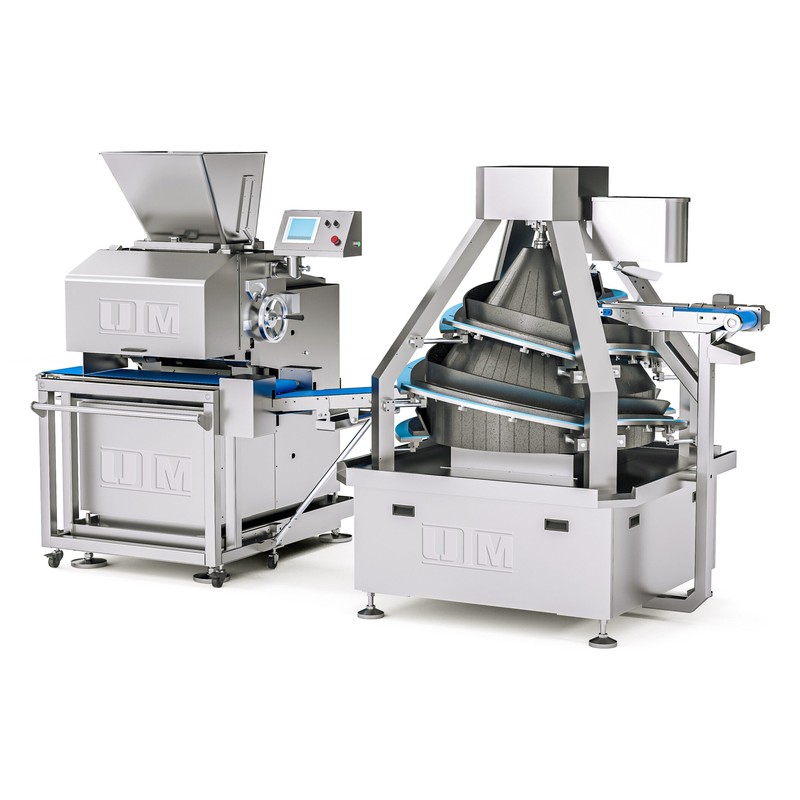
The Dough Divider & Rounder takes bulk dough, cuts it to a preset weight, then rounds each piece into a uniform ball on one frame. Bread, bun, pizza and sweet bun dough run on stored recipe settings, with weight and rounding set independently. Send your piece weight and dough type for a quote.
Product Overview
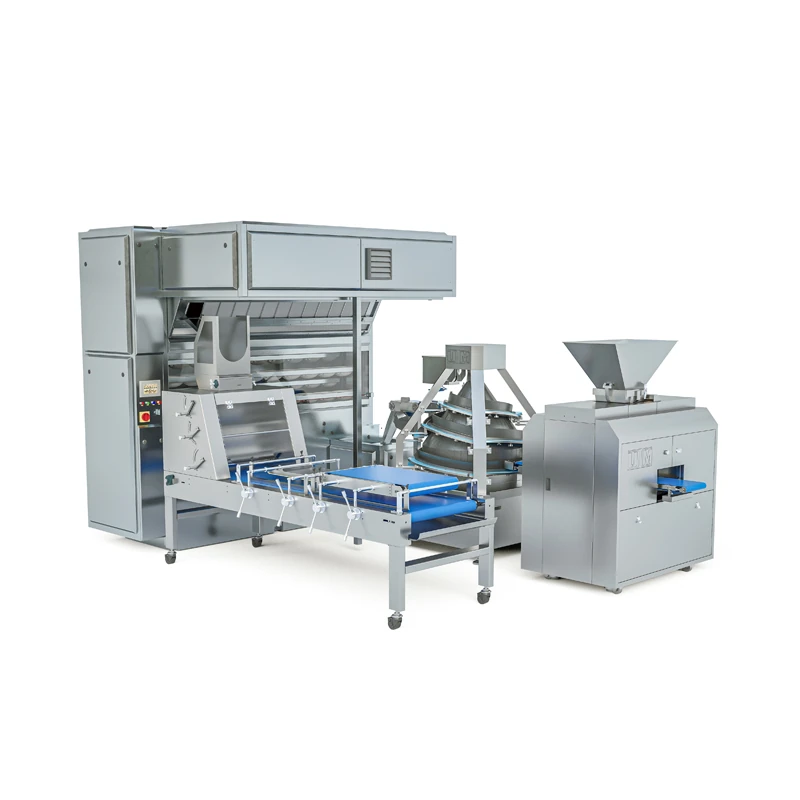
The Dough Divider & Rounder is a dough-processing machine built for automated bakery lines. It takes bulk dough, divides it into individual pieces at a preset weight, and rounds each piece into a smooth, uniform ball. Dividing and rounding happen inside one machine rather than at two separate stations.
On most bakery lines those two steps are still done by hand, or by a divider feeding a separate rounder through a manual transfer. Every transfer is a chance for weight to drift and for dough to lose the shape it needs before proofing. Running both operations in one continuous pass removes that gap: dough enters as bulk and leaves as weighed, rounded balls ready for the proofer.
The machine works as a standalone unit for small and mid-size bakeries, or as a module inside a larger automated line. It can be placed between a dough mixer and a divider elevator, or connected directly to a proofing system, a forming machine or an automatic panning unit.
Because the dividing parameters and rounding conditions are set independently, the same machine can run bread dough, burger bun dough, pizza dough and sweet bun dough without a mechanical rebuild. Operators change the recipe rather than the hardware, which keeps changeover time short on lines that produce several products in a week.
Main Functions
- Automatic dough dividing — bulk dough is cut into individual pieces at a preset weight, without manual weighing or hand cutting.
- Precise dough weight control — piece weight is held to the set value across a production run, so downstream products stay within their target range.
- Automatic dough rounding — each divided piece is rounded into a uniform ball directly after dividing, with no manual handling in between.
- Improved dough surface smoothness — controlled rounding produces a tighter, smoother surface that holds gas better during proofing.
- Uniform dough shape — every piece leaves the machine with the same shape, which keeps the forming and panning stages predictable.
- Continuous dough conveying — dough moves through the machine on a conveyor without stops between dividing and rounding.
- Automatic connection with upstream and downstream equipment — the unit can be linked to a mixer, divider elevator, proofer, forming machine or panning system.
The machine replaces manual dividing and manual rounding with a single continuous automated process, so one operator can supervise a stage that previously needed several people at peak output.
Key Advantages
High-Precision Dough Dividing
Dough weight sets the final product size, its weight on the shelf and the cost of every batch. The dividing system cuts bulk dough into pieces according to preset parameters rather than by eye or by hand. Precise dividing removes the weight spread that manual weighing and cutting introduces, which is what makes a standardized product possible in the first place.
Automatic Dough Rounding
After dividing, each piece enters the rounding system automatically. The dough is guided through a controlled rounding path that closes the surface and pulls the piece into a uniform ball — the shape proofing and forming both expect. Because the rounding is mechanical and repeatable, piece shape no longer depends on how a particular operator happens to handle the dough.
Integrated Dividing & Rounding
Conventional production splits the stage in two: a divider, then a separate rounder, with dough carried between them. The Dough Divider & Rounder runs the sequence as one flow — bulk dough in, automatic dividing, automatic rounding, rounded dough out. Less transfer means less handling damage, a shorter footprint and a stage that does not stall when one operator is pulled away.
Consistent Dough Weight
Dividing parameters are adjustable per product, so the machine covers bread, burger buns, dinner rolls, sweet buns, pizza and small round buns on the same unit. Settings for each product can be stored and recalled, which makes switching between them a matter of loading a recipe instead of resetting the machine by hand.
Reduced Labor Requirement
The machine performs dividing and rounding itself, which takes away manual weighing, cutting, rounding and carrying. That cuts headcount on the stage, but it also removes the variation that comes with human handling — two operators doing the same job rarely produce the same piece twice.
Flexible Production Line Integration
The unit fits several line layouts. For bread and buns the usual order is dough mixer, divider and rounder, divider elevator, proofing system, forming machine. For other products the flow can run dough mixing, dividing and rounding, automatic panning, proofing and baking. It suits both new automated lines and upgrades to equipment a bakery already runs.
How It Works
Bulk dough is loaded into the machine and divided into individual pieces at the preset weight. Each piece then enters the rounding system, where controlled mechanical movement closes the surface and forms it into a more uniform, smoother ball. The rounded pieces are discharged by the conveying system and transferred to the next stage of production.
The whole sequence runs continuously. No operator has to weigh, cut or reposition individual pieces between steps, which is the part of the process that limits output on a manual line.
Production Process
- Dough feeding
- Precision dividing
- Automatic rounding
- Dough discharge
- Proofing or forming
Industrial Applications
The machine is used wherever bulk dough has to be turned into weighed, rounded pieces at a steady rate. Product types it covers:
- Bread production
- Burger bun production
- Hot dog bun production
- Dinner roll production
- Sweet bun production
- Croissant production
- Pizza production
- Donut production
- Small round bun production
- Other dough products
The machine can be configured to match different dough characteristics, product weights and production speeds, so a line making soft, high-hydration dough and a line making tight, low-hydration dough do not need the same settings.
Who It Is For
- Industrial bakery factories
- Burger bun manufacturers
- Central kitchens
- Frozen bakery manufacturers
- Bakery and foodservice chains
- Commercial bakeries
- Food processing companies
- OEM and ODM food manufacturers
It fits operations that need high volume and a standardized piece — where a few grams of drift per piece turns into a visible difference on the shelf, or into a cost problem across a shift.
Intelligent Control System
The machine can be equipped with a PLC and HMI control system that monitors and controls the main operating parameters. From the panel, operators adjust:
- Dough weight
- Dividing parameters
- Rounding parameters
- Conveyor speed
- Production speed
- Equipment status
- Fault alarms
Production parameters for different products can be stored and recalled, which shortens changeover on a line that runs more than one product. Where the machine is part of a complete line, it can also be tied into the line’s central PLC so that dividing and rounding follow the pace set upstream and downstream.
Hygienic Food-Grade Design
The machine follows hygienic design principles for food processing. Food-contact components are made from materials suitable for food production, and the structure is laid out so surfaces can be cleaned and maintained without dismantling the unit. Because the machine handles dough instead of people handling dough, it also removes a large part of the manual contact that hygiene programs have to control.
Customized Design
Product weight, dough behavior and capacity all change what the machine has to do, so the unit is built to the line rather than sold as a fixed box. Configuration is set according to:
- Product weight
- Dough type
- Dough hydration
- Target production capacity
- Dividing accuracy
- Rounding requirements
- Conveying direction
- Discharge height
- Upstream and downstream equipment
- Factory layout
The last four matter more than they look on paper. Discharge height and conveying direction decide whether the machine can feed the existing proofer without a rework, and factory layout decides whether it fits the floor space available. Both are settled before the unit is built, not after it arrives.
Why Choose a Dough Divider & Rounder
Dough handling is the stage that decides whether the rest of the line runs steady. A divider and rounder that produces an even piece makes proofing, forming and panning predictable; one that does not turns every later stage into a correction. Automating the two operations together gives manufacturers six concrete gains:
- Higher production efficiency — dividing and rounding run continuously instead of in batches with handling in between.
- Better product consistency — stable dough weight and shape carry through proofing and forming, so the finished product matches its spec.
- Lower labor cost — manual weighing, cutting and rounding are taken out of the stage.
- Less human variation — piece weight and shape stop depending on who is working the station.
- Continuous production — the unit connects directly to elevators, proofing systems, forming machines and panning systems.
- Higher production standardization — experience-based manual work becomes a controlled, repeatable process that can be documented and audited.
FAQ
Can the machine handle different dough weights?
Yes. Dividing parameters are adjusted to the weight each product needs, so the same unit runs different piece sizes without a mechanical change.
Are dividing and rounding performed in the same machine?
Yes. The machine integrates dough dividing and dough rounding into one continuous automated process, with no manual transfer between the two steps.
Can it connect with equipment from other manufacturers?
Yes. The machine is designed around the height, conveying direction and interfaces of the upstream and downstream equipment it has to work with, including third-party units.
Can it be used for burger bun production?
Yes. Burger buns, bread, dinner rolls and other dough products are standard applications for this machine.
Can it be connected to a proofing system?
Yes. Rounded pieces can be transferred to an automatic proofing system by conveyor or through a divider elevator.
Can it be used to upgrade an existing production line?
Yes. Automation upgrades are designed around the equipment and process a bakery already runs, rather than requiring the line to be replaced.
Products